
Technology Decisions That Affect Growth, Operations, and Enterprise Value
Practical insights on technical due diligence, operational transformation, software architecture, AI, and technology leadership.
The areas we work in
Start with the kind of decision or operating problem you are trying to understand.
Investment & Due Diligence
Technology risk, operating reality, and the evidence behind investment decisions.
Explore topicOperational Transformation
How critical business flows can be understood and improved before technology is added.
Explore topicArchitecture & Modernization
Practical choices for systems that need to become more reliable, maintainable, or ready to scale.
Explore topicAI & Automation
Where automation and AI fit, and where a simpler operating change is the better answer.
Explore topicTechnology Leadership
The leadership, decisions, and delivery conditions behind sustainable technical progress.
Explore topicA current perspective from Sharp Logica
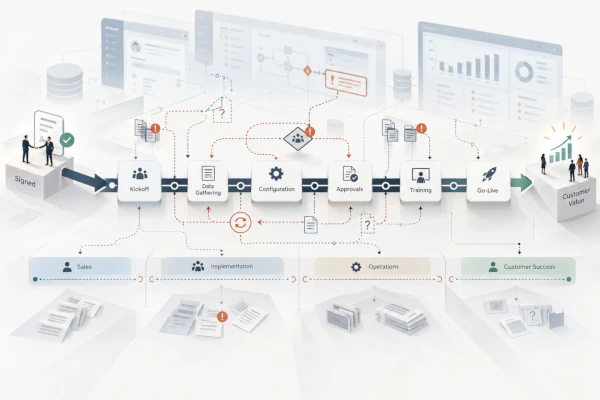
Customer Onboarding Is Usually a Process Problem Before It Is a Software Problem
When onboarding is slow or inconsistent, a new platform can look like the obvious answer. The underlying problem is more often the way work, information, ownership, and exceptions move from the commercial handoff to customer value.

Your Team Isn't Slow. Your System Needs CTO Leadership
Many CEOs and non-technical leaders assume a 'slow' engineering team is a talent or effort problem, when in reality the delivery system itself is confused. Here we explain how unclear priorities, scope churn, and hidden dependencies quietly destroy throughput, why adding more engineers often makes things worse, and which simple metrics actually matter.
It also shows how CTO-level and Fractional CTO leadership can redesign the flow of work so your existing team ships faster without resorting to overtime and burnout.
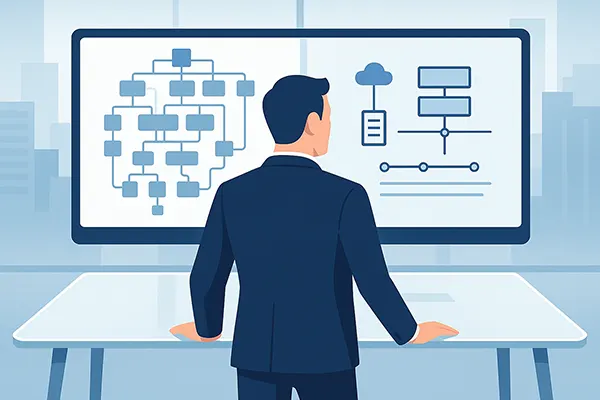
Do You Actually Need a CTO, or Someone to Unblock Your Tech?
Founders and C level leaders often feel that technology is slowing them down but are unsure whether the answer is hiring a full time CTO or finding targeted senior support. Here we explore what a CTO is actually responsible for, and why that full scope can be excessive for a single product and a small engineering team.
The core idea is to show when fractional leadership is a better fit, and how a focused Fractional CTO engagement can bring clarity, de risk key decisions, and stabilize delivery within the next 12 to 18 months, or even shorter period of time.
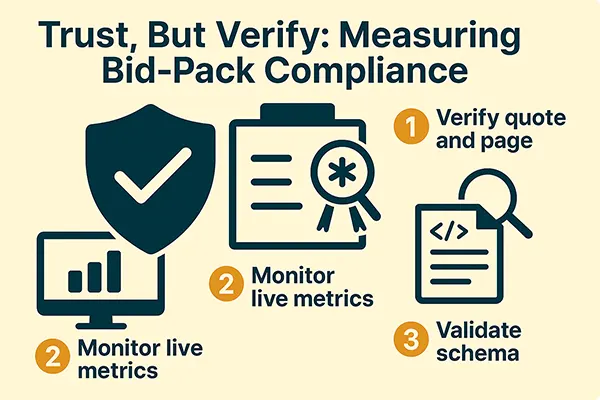
AI-Powered Processing of 500+ Page Bid Packs at Scale (4/4)
Big organizations drown in documents: 500-plus-page PDFs, scanned annexes, tables, and forms that arrive not once, but all the time. Shoving entire files into an LLM is slow, expensive, and hard to defend. This post shows a better way with AI: extract a small, testable catalog of requirements, index the documents locally, retrieve only the few passages that matter, and demand verbatim, page-linked evidence.
We use procurement as the running example, but the same pattern applies anywhere you process large volumes of pages: vendor risk and security due diligence, contract and policy review, healthcare and regulatory dossiers, M&A data rooms, insurance claims, ESG reports, and more.
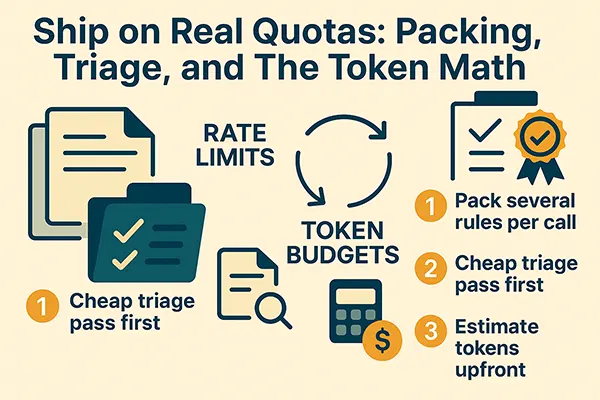
AI-Powered Processing of 500+ Page Bid Packs at Scale (3/4)
Big organizations drown in documents: 500-plus-page PDFs, scanned annexes, tables, and forms that arrive not once, but all the time. Shoving entire files into an LLM is slow, expensive, and hard to defend. This post shows a better way with AI: extract a small, testable catalog of requirements, index the documents locally, retrieve only the few passages that matter, and demand verbatim, page-linked evidence.
We use procurement as the running example, but the same pattern applies anywhere you process large volumes of pages: vendor risk and security due diligence, contract and policy review, healthcare and regulatory dossiers, M&A data rooms, insurance claims, ESG reports, and more.
AI-Powered Processing of 500+ Page Bid Packs at Scale (2/4)
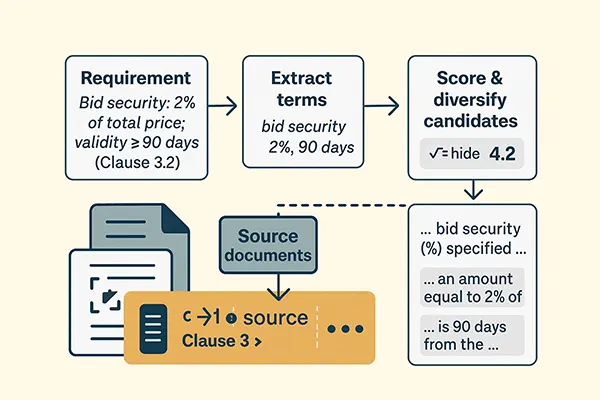
Big organizations drown in documents: 500-plus-page PDFs, scanned annexes, tables, and forms that arrive not once, but all the time. Shoving entire files into an LLM is slow, expensive, and hard to defend. This post shows a better way with AI: extract a small, testable catalog of requirements, index the documents locally, retrieve only the few passages that matter, and demand verbatim, page-linked evidence.
We use procurement as the running example, but the same pattern applies anywhere you process large volumes of pages: vendor risk and security due diligence, contract and policy review, healthcare and regulatory dossiers, M&A data rooms, insurance claims, ESG reports, and more.
AI-Powered Processing of 500+ Page Bid Packs at Scale (1/4)
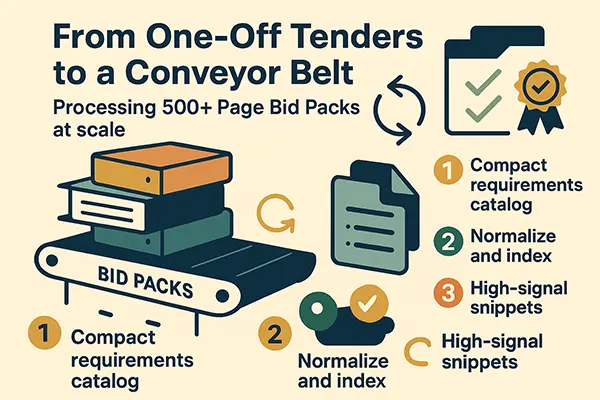
Big organizations drown in documents: 500-plus-page PDFs, scanned annexes, tables, and forms that arrive not once, but all the time. Shoving entire files into an LLM is slow, expensive, and hard to defend. This post shows a better way with AI: extract a small, testable catalog of requirements, index the documents locally, retrieve only the few passages that matter, and demand verbatim, page-linked evidence.
We use procurement as the running example, but the same pattern applies anywhere you process large volumes of pages: vendor risk and security due diligence, contract and policy review, healthcare and regulatory dossiers, M&A data rooms, insurance claims, ESG reports, and more.
Need a clearer view of a technology or operational problem?
Sharp Logica works with investors and operating companies on technical diligence, operational transformation, architecture, and technology leadership.
Subscribe to Our Newsletter
Stay current on the technology and operational decisions that affect business value. Technical diligence, operational transformation, architecture, AI, and technology leadership, without the hype.
We respect your privacy. Unsubscribe at any time.