
Technology Decisions That Affect Growth, Operations, and Enterprise Value
Practical insights on technical due diligence, operational transformation, software architecture, AI, and technology leadership.
Currently viewing category: AI
How We Approach Operational Transformation
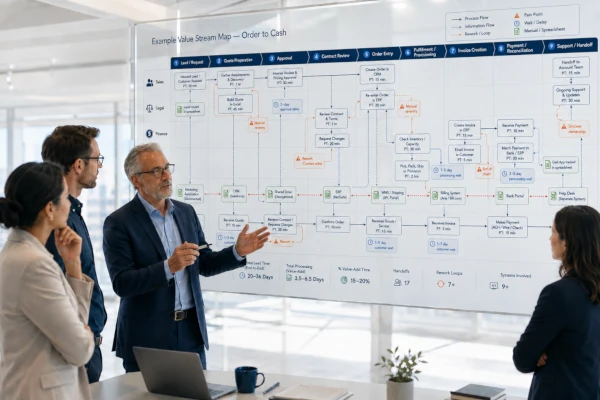
How We Approach Operational Transformation
Companies are under growing pressure to automate and adopt AI, but technology is rarely the best place to start.
The first step is understanding how work actually moves through the business, where time and value are being lost, and which parts of the process should change before any technology is introduced.
How We Approach Operational Transformation
Companies are under growing pressure to automate and adopt AI, but technology is rarely the best place to start.
The first step is understanding how work actually moves through the business, where time and value are being lost, and which parts of the process should change before any technology is introduced.
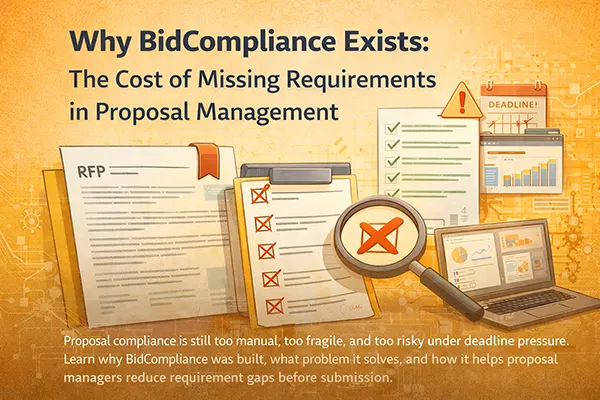
Why BidCompliance Exists: Because Manual RFP Compliance Review Breaks Down Fast
Reviewing one RFP is manageable. Reviewing the original RFP, multiple amendments, clarifications, and bid documents together is where manual compliance starts to break down. BidCompliance turns that complexity into a clear compliance matrix with Met, Partially Met, and Not Met.
Read Article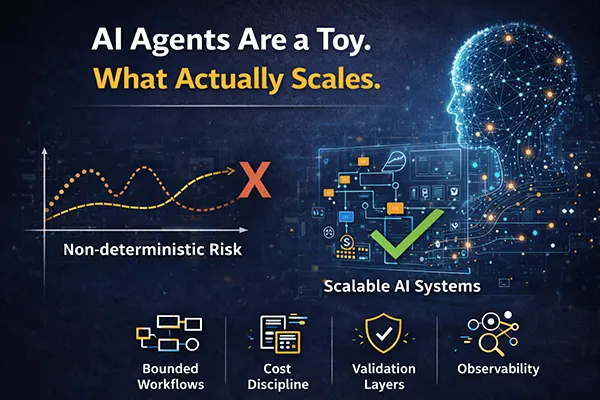
AI Agents Are a Toy. Here’s What Actually Scales.
Most AI agents work in demos but collapse under production constraints. Learn why autonomous agent hype hides non deterministic risk and what scalable AI architecture actually requires.
Discover how bounded workflows, cost discipline, validation layers, and observability turn probabilistic models into reliable revenue systems.

The AI Agents Hype: Loud Claims, Quiet Reality
The hype says AI agents will replace developers. Reality is much quieter: value comes from workflow-first systems with bounded, auditable LLM steps.
This is how you avoid demo-driven engineering and ship systems that you can actually operate.
A CTO-level view, backed by DORA, METR, McKinsey, and Goldman Sachs.
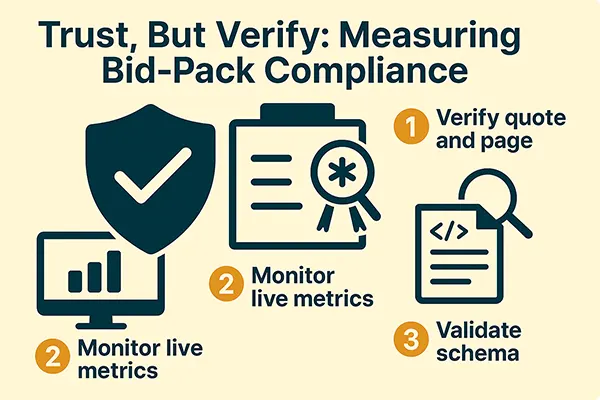
AI-Powered Processing of 500+ Page Bid Packs at Scale (4/4)
Big organizations drown in documents: 500-plus-page PDFs, scanned annexes, tables, and forms that arrive not once, but all the time. Shoving entire files into an LLM is slow, expensive, and hard to defend. This post shows a better way with AI: extract a small, testable catalog of requirements, index the documents locally, retrieve only the few passages that matter, and demand verbatim, page-linked evidence.
We use procurement as the running example, but the same pattern applies anywhere you process large volumes of pages: vendor risk and security due diligence, contract and policy review, healthcare and regulatory dossiers, M&A data rooms, insurance claims, ESG reports, and more.
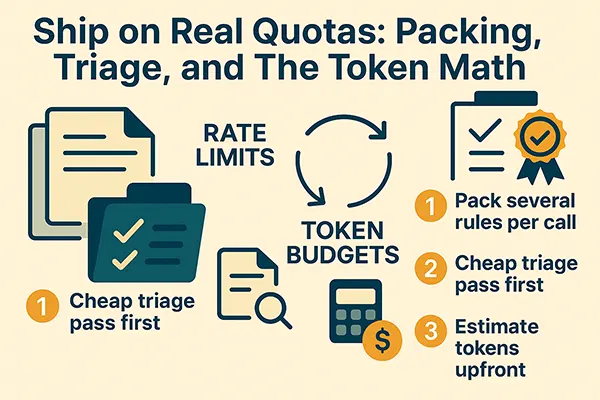
AI-Powered Processing of 500+ Page Bid Packs at Scale (3/4)
Big organizations drown in documents: 500-plus-page PDFs, scanned annexes, tables, and forms that arrive not once, but all the time. Shoving entire files into an LLM is slow, expensive, and hard to defend. This post shows a better way with AI: extract a small, testable catalog of requirements, index the documents locally, retrieve only the few passages that matter, and demand verbatim, page-linked evidence.
We use procurement as the running example, but the same pattern applies anywhere you process large volumes of pages: vendor risk and security due diligence, contract and policy review, healthcare and regulatory dossiers, M&A data rooms, insurance claims, ESG reports, and more.
Need a clearer view of a technology or operational problem?
Sharp Logica works with investors and operating companies on technical diligence, operational transformation, architecture, and technology leadership.
Subscribe to Our Newsletter
Stay current on the technology and operational decisions that affect business value. Technical diligence, operational transformation, architecture, AI, and technology leadership, without the hype.
We respect your privacy. Unsubscribe at any time.