
Technology Decisions That Affect Growth, Operations, and Enterprise Value
Practical insights on technical due diligence, operational transformation, software architecture, AI, and technology leadership.
The areas we work in
Start with the kind of decision or operating problem you are trying to understand.
Investment & Due Diligence
Technology risk, operating reality, and the evidence behind investment decisions.
Explore topicOperational Transformation
How critical business flows can be understood and improved before technology is added.
Explore topicArchitecture & Modernization
Practical choices for systems that need to become more reliable, maintainable, or ready to scale.
Explore topicAI & Automation
Where automation and AI fit, and where a simpler operating change is the better answer.
Explore topicTechnology Leadership
The leadership, decisions, and delivery conditions behind sustainable technical progress.
Explore topicA current perspective from Sharp Logica
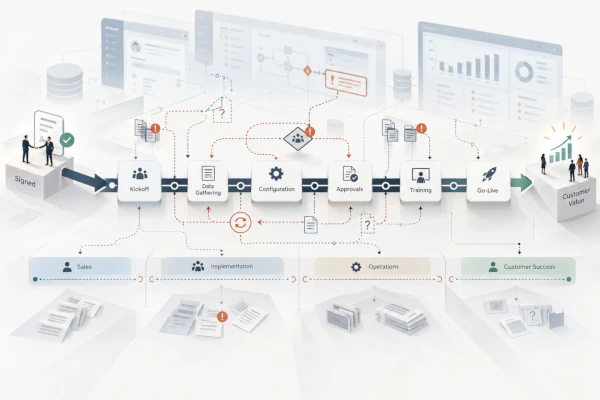
Customer Onboarding Is Usually a Process Problem Before It Is a Software Problem
When onboarding is slow or inconsistent, a new platform can look like the obvious answer. The underlying problem is more often the way work, information, ownership, and exceptions move from the commercial handoff to customer value.
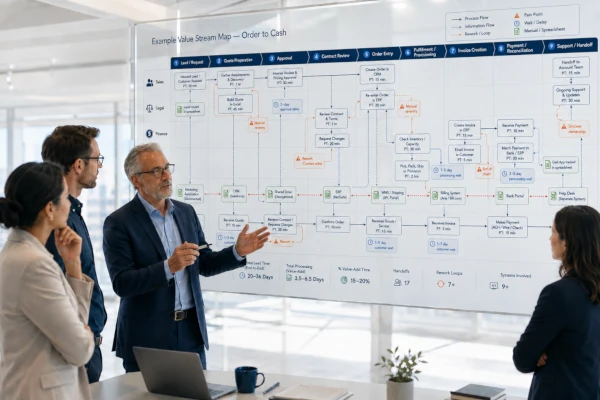
How We Approach Operational Transformation
Companies are under growing pressure to automate and adopt AI, but technology is rarely the best place to start.
The first step is understanding how work actually moves through the business, where time and value are being lost, and which parts of the process should change before any technology is introduced.
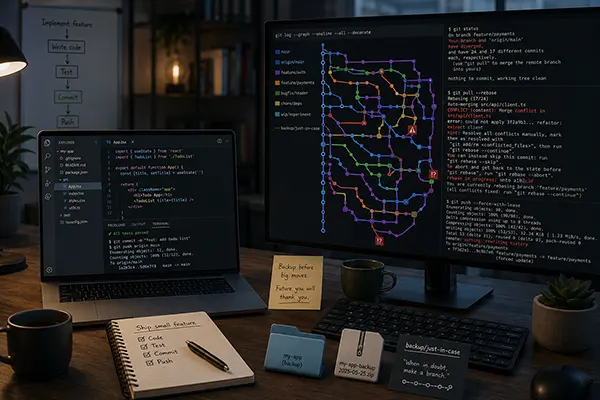
We Need to Be More Honest About Git
Git is powerful, widely adopted, and almost impossible to avoid, but that does not make it intuitive or well suited to everyday development work. Once branches diverge, conflicts appear, history is rewritten, or changes must move between releases, Git exposes developers to a complicated and often opaque internal model.
This article examines why junior developers should not be ashamed of finding Git difficult, why senior engineers quietly create backup branches and ZIP files, and why teams should simplify their workflows instead of pretending the tool is easy.
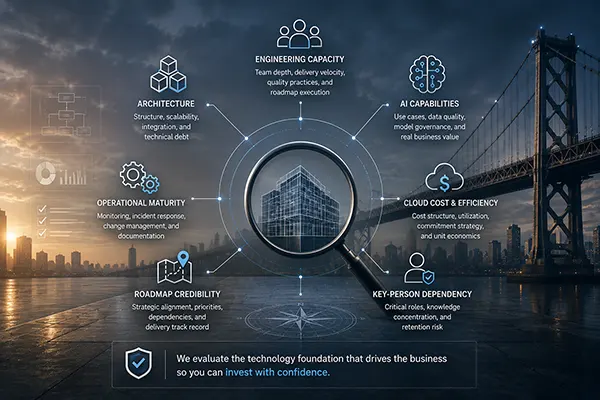
What We Look for During Technical Due Diligence of a Software-Enabled Business
Many acquisition targets are not pure software companies, but their operations, growth plans, customer experience, compliance posture, and margins may still depend heavily on technology. Technical due diligence should uncover where the platform supports the investment thesis, where it creates risk, and what needs to be addressed after close. Sharp Logica evaluates architecture, engineering capacity, AI claims, operational maturity, cloud cost, roadmap credibility, and key-person dependency so investors can understand what they are really acquiring.
Read Article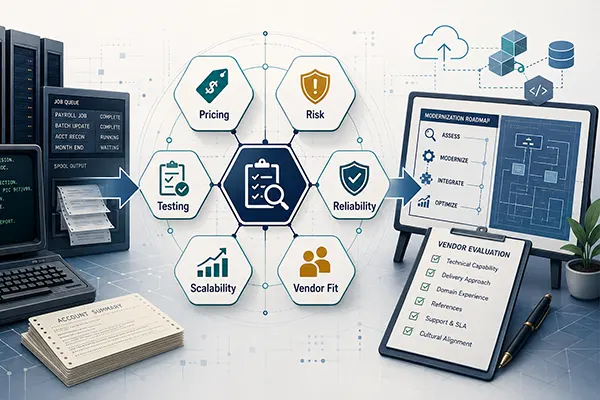
How to Evaluate COBOL Modernization Services Before Choosing a Vendor
COBOL modernization services can mean very different things depending on the vendor. One provider may be selling rehosting, another may be selling automated conversion, while another may be offering assessment, roadmap, architecture governance, and delivery support. Before choosing a vendor, buyers need to understand pricing assumptions, delivery risk, testing discipline, business-rule validation, operational continuity, and whether the provider is prepared for the realities of business-critical systems.
Read Article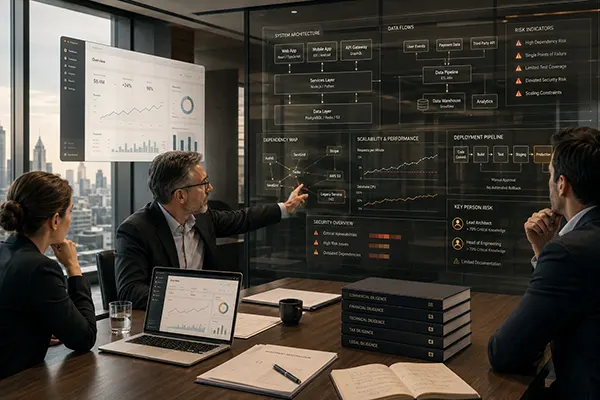
What PE Firms Miss When Technical Diligence Gets One Paragraph
Private equity firms reprice financial risk all the time, but technical risk often gets reduced to a short paragraph in the investment committee memo. That can be expensive.
A software platform may look stable during the deal process while hiding immature AI features, untested scalability, key-person dependency, roadmap pressure, and architectural limits that only become visible after close.
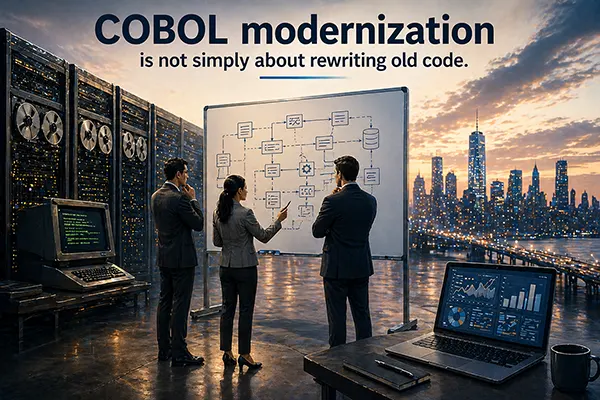
How to Modernize a COBOL Payment Processing Platform Without Breaking the Business
COBOL modernization is not simply about rewriting old code. For payment processors, the real challenge is understanding business rules, batch flows, data lineage, job dependencies, and operational risk before changing the platform that runs the business.
A company may want APIs, cloud analytics, lower operating costs, and less dependence on scarce mainframe expertise, but none of that can be achieved safely without first understanding how the existing platform actually works. In a payment environment, the COBOL programs are only one part of the system.
Need a clearer view of a technology or operational problem?
Sharp Logica works with investors and operating companies on technical diligence, operational transformation, architecture, and technology leadership.
Subscribe to Our Newsletter
Stay current on the technology and operational decisions that affect business value. Technical diligence, operational transformation, architecture, AI, and technology leadership, without the hype.
We respect your privacy. Unsubscribe at any time.