
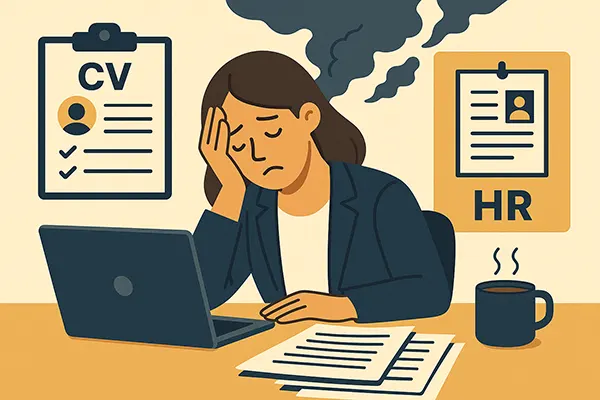
5 Signs Resume Screening Is Burning Out Your HR Team
Resume screening is one of those tasks everyone agrees is important… and almost nobody actually enjoys doing. When it goes well, your team feels like a strategic partner to the business. When it goes badly, it turns into late evenings, rushed decisions, and a nagging fear that the best candidates slipped through the cracks.
5 Signs Your Resume Screening Process Is Burning Out Your HR Team
Resume screening is one of those tasks everyone agrees is important… and almost nobody actually enjoys doing. When it goes well, your team feels like a strategic partner to the business. When it goes badly, it turns into late evenings, rushed decisions, and a nagging fear that the best candidates slipped through the cracks.
If you’re hiring regularly and still treating resume screening as a manual, “read everything, rank everything” exercise, there’s a good chance your HR team is carrying more load than they should. Here are five signs your current process is quietly burning them out.
Sign 1: Shortlisting takes days instead of hours
Ask yourself a simple question: how long does it really take to move from “job posted” to “shortlist ready”?
If the honest answer is “a few days, if nothing else gets in the way,” that’s already a red flag. It usually means:
- Recruiters are opening each resume one by one.
- They’re scanning for keywords with tired eyes.
- They’re juggling interruptions, meetings, and inbox overload in between.
The problem isn’t that they’re slow. The problem is that the process isn’t built for the volume you’re handling. When shortlisting becomes a marathon instead of a focused block of work, people start cutting corners just to keep things moving: skimming instead of reading, relying on gut feel instead of evidence, and defaulting to “safe” profiles.
Over time, this doesn’t just slow down hiring. It chips away at morale. No one gets into HR because they dream of spending half their week reading resumes.
Sign 2: Your recruiters live in spreadsheets and browser tabs
If you look over a recruiter’s shoulder and see ten browser tabs, three versions of a spreadsheet, and a notes file open… that’s another sign the process has outgrown the tools.
Many teams “glue” their process together like this:
- Resumes sit in an inbox or ATS.
- Notes are kept in Excel or Google Sheets.
- Rankings live in someone’s head or in ad hoc columns.
- Feedback from hiring managers arrives via email or chat.
Every little step adds micro-friction. Copying names. Updating statuses. Remembering who was strong for which role. Sharing the shortlist in yet another format because someone doesn’t like spreadsheets. None of this is strategic, but all of it consumes brainpower.
This constant context switching is exhausting. It also increases the risk of mistakes: mislabelled candidates, lost notes, or wrong versions of a shortlist being discussed. When your HR team spends more time managing the “admin of screening” than evaluating actual people, burnout is not far behind.
Sign 3: “I’ll get to it tonight” has become normal
One of the clearest signals of an unhealthy process is when after-hours screening becomes the default, not the exception.
If you regularly hear things like:
“I’ll finish the shortlist tonight after the kids go to bed.” “I’ll try to catch up on resumes over the weekend.”
…that’s not dedication. That’s a system that’s leaning too heavily on individual heroics.
Resume screening is cognitively demanding. Doing it when people are tired, distracted, or trying to squeeze it in around personal time doesn’t improve quality. It just silently drains energy, and over time it turns into disengagement, higher turnover, or quiet resentment towards the hiring process.
A sustainable process fits into the working day. It doesn’t depend on late evenings with a laptop on the sofa.
Sign 4: Good candidates are rejected for vague reasons
Another symptom of screening overload is what you see in your rejection logic.
If feedback looks like “not a fit,” “not strong enough,” or “others are better” without clear reasons, that’s often a sign that the reviewer was operating under time pressure. In that state, we rely heavily on quick impressions: familiar schools, big brand employers, “nice looking” Resume.
The risk is obvious: promising candidates get rejected early simply because their resumes is harder to parse quickly, or their experience doesn’t match the most superficial pattern the reviewer has in mind.
When load is high and time is limited, it’s very hard for humans to consistently compare each candidate against the actual job criteria. They’re doing their best, but the system is working against them. And that leads to something worse than slow hiring: the wrong people getting through, and the right ones being quietly filtered out.
Sign 5: Hiring managers are losing trust in the shortlist
You might not hear this in the first conversation, but it shows up in small ways. Hiring managers ask to “see all the resumes anyway.” They regularly ask for new candidates even though you’ve already sent a shortlist. They start forwarding profiles directly from LinkedIn, bypassing your process.
What they’re really saying is: “I’m not convinced the shortlist reflects the best of the pool.”
Sometimes that doubt is unfair. Your team is doing heroic work behind the scenes. But if your recruiters are overwhelmed, decisions are rushed, and the process is opaque, it’s understandable that managers start to mistrust the output.
This, again, feeds back into burnout. Now your HR team is not only overloaded, they’re also feeling underappreciated and second-guessed. That’s a tough combination.
What a healthier resume screening process looks like
A healthier process doesn’t mean ignoring resumes or outsourcing judgment to a black box. It means giving your HR team better leverage.
In practice, that looks like:
- Letting technology handle the repetitive part: scanning resumes, matching them to the job description, and highlighting the most relevant profiles.
- Giving recruiters a clear, structured view of each candidate: strengths, gaps, and how they compare to the requirements.
- Shifting human effort from “reading everything” to “reviewing the most promising” and making nuanced decisions.
Instead of manually reading 150 resumes for a role, maybe your team reviews the top 25 with high-quality context. They still own the decision. They still apply their expertise and judgment. But they’re not wasting hours on obvious mismatches or trying to mentally juggle dozens of profiles at once.
That’s the problem Screentico is built to solve: take the heavy lifting out of resume screening so your team can focus on what they’re actually good at: spotting potential, asking the right questions, and building relationships with candidates and hiring managers.
Turning burnout into competitive advantage
If you recognized your current process in any of these signs, it doesn’t mean your team is doing a bad job. It means they’re working against an outdated way of handling volume.
Fixing that isn’t just about making people happier (though it does). It also makes your hiring faster, more consistent, and more fair. Candidates get quicker responses. Hiring managers see higher quality shortlists. Your HR team gets to feel like a strategic partner again instead of a filter.
And once resume screening stops burning everyone out, it becomes what it should have been all along: an asset, not a bottleneck.
If you’d like to explore how to get there without rewriting your whole process, that’s exactly where tools like Screentico come in.
Try Screentico for free and see how AI-powered resume screening can support your HR team? Try Screentico for free
Discussion Board Coming Soon
We're building a discussion board where you can share your thoughts and connect with other readers. Stay tuned!
Ready for CTO-level Leadership Without a Full-time Hire?
Let's discuss how Fractional CTO support can align your technology, roadmap, and team with the business, unblock delivery, and give you a clear path for the next 12 to 18 months.
Or reach us at: info@sharplogica.com